Science
Do Ice Baths Really Work? The Science Behind Cold Water Immersion for Recovery
By Alexandra O'Connor · 2025-11-11 · 4 min read
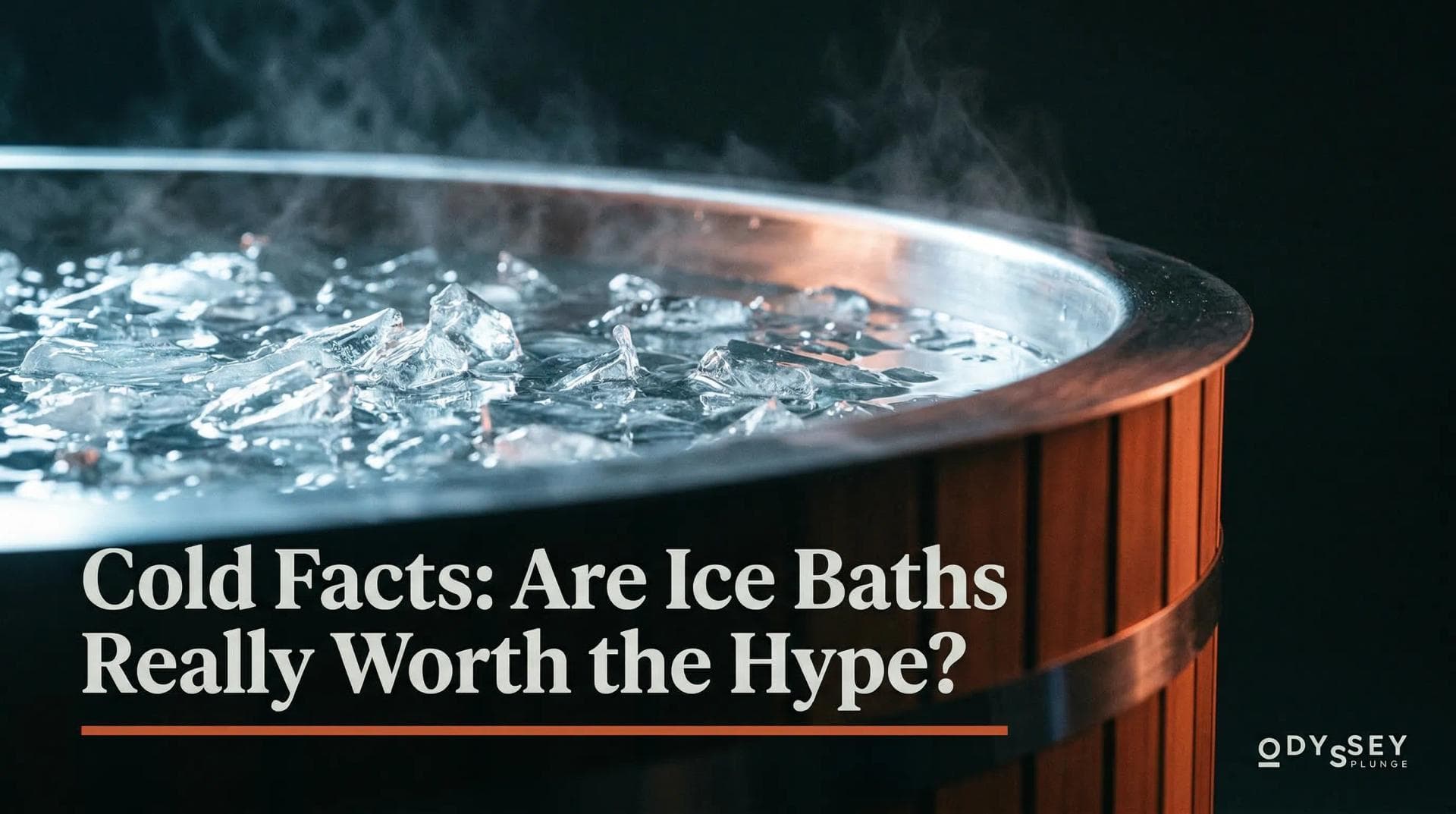
In recent years, headlines have questioned whether ice baths and cold-water immersion (CWI) actually work. Some articles claim the benefits are exaggerated, while others suggest cold exposure may even slow muscle growth.
The reality is more nuanced.
Cold-water immersion remains one of the most widely used recovery strategies in elite sport. When used correctly, it can reduce muscle soreness, support recovery between training sessions, and help athletes feel ready to perform again.
At Odyssey Plunge, we believe recovery should be guided by both science and real-world performance. Here’s what the research actually says about ice baths and recovery.
How Ice Baths Help Muscle Recovery
Cold-water immersion triggers several physiological responses that help the body recover after intense training.
1. Improved Circulation Through Vasoconstriction
When the body is immersed in cold water, blood vessels constrict (vasoconstriction). This temporarily reduces blood flow to muscles and helps limit inflammation.
After leaving the ice bath, blood vessels expand again (vasodilation). This process helps increase circulation and assists the removal of metabolic waste products from muscle tissue.
2. Reduced Muscle Soreness
One of the most consistent benefits of cold-water immersion is the reduction of delayed onset muscle soreness (DOMS).
Studies show that athletes who use cold immersion after intense exercise often experience:
- reduced soreness in the following 24–72 hours
- lower markers of muscle damage
- improved comfort during subsequent training sessions
3. Neurological and Mental Reset
Cold exposure also affects the nervous system.
Many athletes report improved alertness, reduced fatigue, and a stronger sense of recovery after immersion. While this effect is partly physiological, the mental reset from cold exposure is also an important part of recovery readiness.
What Scientific Research Says About Cold Water Immersion
Several large reviews and meta-analyses have evaluated the effectiveness of ice baths.
Key findings include:
- A 2015 systematic review found cold-water immersion significantly reduced muscle soreness compared with passive recovery, with optimal protocols around 10–15°C for 10–15 minutes.
- A 2022 review analysing 68 studies reported that cold immersion improved recovery of muscle strength and jump performance while reducing creatine kinase levels and soreness.
- Another meta-analysis concluded that cold immersion is more effective than many common recovery methods, such as active recovery or warm-water immersion, when the goal is reducing soreness.
- Research also suggests that moderate immersion times and endurance-type exercise produce the most consistent benefits.
Overall, the scientific consensus is that cold immersion can be an effective recovery tool when applied in the correct context.
Why Some Studies Show Conflicting Results
If ice baths work, why do some studies question them?
In most cases, the differences come down to how the cold immersion is used.
Several factors strongly influence results.
Timing
Cold immersion tends to be most effective when used within 1–2 hours after intense training.
Water Temperature and Duration
Most successful research protocols use:
- 10–15°C water temperature
- 10–15 minutes immersion
Temperatures that are too warm or immersion times that are too short often produce weaker effects.
Type of Exercise
Cold immersion shows the strongest benefits after:
- high-intensity workouts
- endurance training
- eccentric (muscle-lengthening) exercises
These activities create more muscle damage and soreness, making recovery benefits easier to measure.
Training Goals
If the primary goal is muscle hypertrophy, very frequent immediate cold immersion after strength training may slightly reduce long-term adaptation.
For this reason, athletes often use cold immersion strategically rather than after every training session.
How to Use an Ice Bath Effectively
Beginner Protocol
If you are new to cold immersion:
- Start with 2–3 minutes in water around 12–15°C
- Focus on relaxed breathing
- Immerse legs and lower body first if full immersion feels too intense
Gradual exposure helps the body adapt safely.
Standard Recovery Protocol
For most athletes and active individuals:
- 10–15 minutes immersion
- 10–15°C water temperature
- Use after your hardest training sessions
This range is the most consistently supported by research.
Advanced or Elite Use
Elite athletes often use high-precision systems that maintain consistent temperatures and allow full-body immersion.
These setups allow:
- accurate temperature control
- repeatable recovery protocols
- better monitoring of recovery routines
Cold immersion works best when combined with other recovery strategies such as sleep, nutrition, hydration and mobility work.
Why Temperature Precision Matters
Many people attempt cold therapy using ice and water, which can make it difficult to maintain consistent temperatures.
Professional cold plunge systems like Odyssey Plunge allow users to control temperature precisely and maintain stable conditions during every session.
This consistency allows athletes to apply scientifically supported protocols more reliably.
Final Thoughts: Are Ice Baths Worth It?
Cold-water immersion is not a miracle cure, but it is far from a fad.
Decades of athlete use combined with modern scientific research show that ice baths can:
- reduce muscle soreness
- support recovery between training sessions
- improve perceived readiness to perform
The key is using cold immersion correctly — at the right temperature, for the right duration, and at the appropriate time within your training routine.
Recovery is not accidental. It is engineered.
Step in. Breathe deeply. Reset your body.