Buying Guides
Choosing Your First Cold Plunge for Home
By Odyssey Plunge · 2026-10-28 · 5 min read
A useful cold plunge is one that fits your space, your routine and the amount of care you are willing to give it. The bath that looks best in a photograph is not always the one you will still be using in a year, and the difference usually comes down to decisions made before anything is ordered.
This guide works through those decisions in the order they actually matter.
Start with the way you will use it
Before you compare models, be honest about the session you are picturing.
A short daily dip before work is a different proposition from a long weekend soak. If you want three minutes and a hot shower, a compact bath you can get into quickly will serve you better than something larger that takes longer to cool and more water to manage. If you want room to stretch out, or you expect to share the space with a partner occasionally, that changes both the shape and the supporting equipment.
Think about frequency too. A bath used five times a week earns a more capable chiller and a filtration arrangement that keeps up. A bath used at weekends can be specified more modestly, as long as you are realistic that water care still happens whether you bathed or not.
Match the shape to the way you want to sit
The shape of the tank changes how you enter, how you sit and how much of you is actually submerged. It is worth sitting in one before you decide.
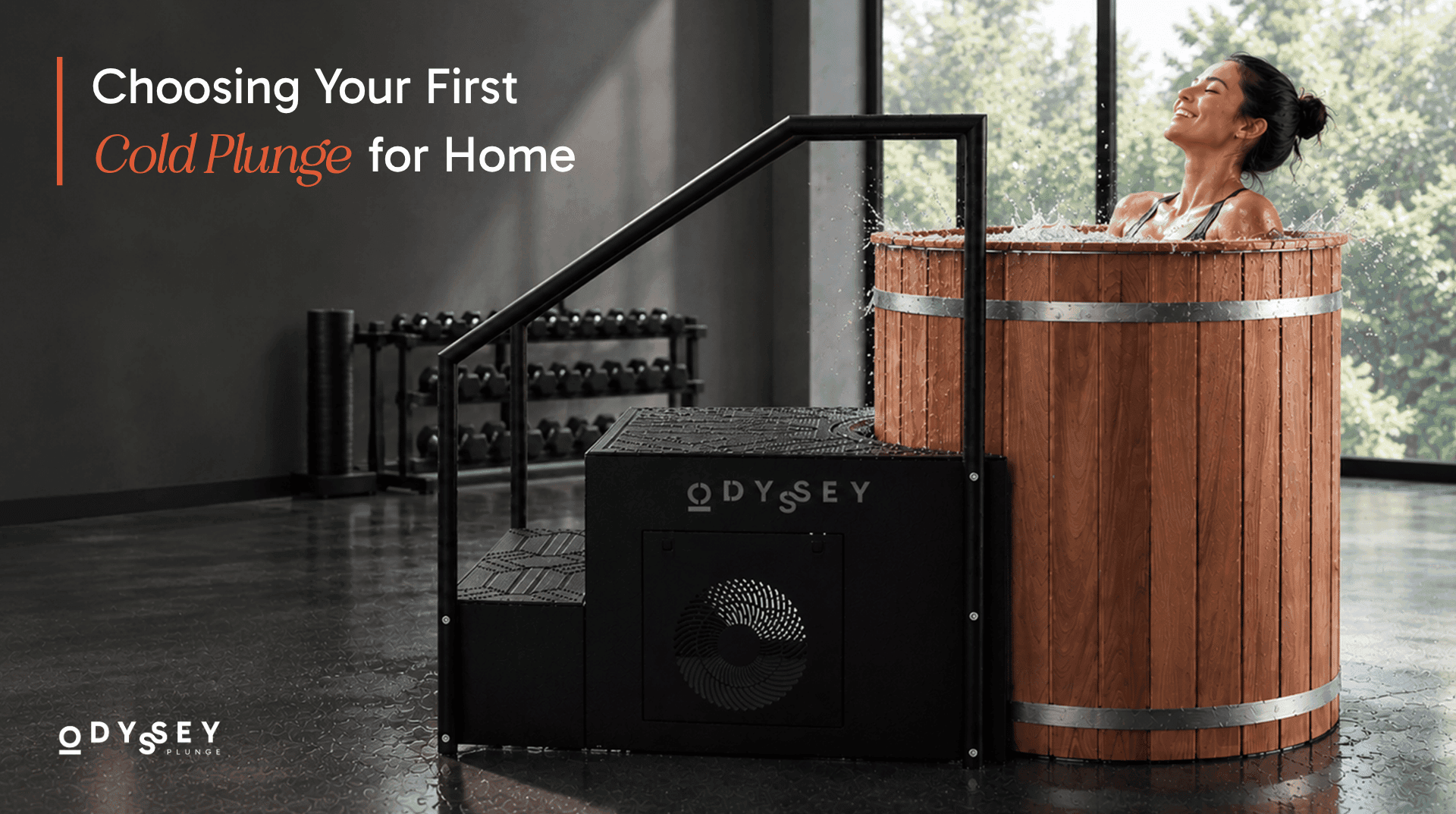
Atlas is a tall, round plunge with two steps and a built-in seat. The elevated design suits a full-body soak in an upright position, and the steps make entry straightforward, which matters more than people expect on a cold morning. The round footprint can tuck into a corner, though it still needs clear space around it for cover removal and servicing.
Forge is an oval bath with a larger capacity, built for full-body immersion with room to extend your legs. It runs from 3 °C to 42 °C, so the same vessel covers cold and warm sessions if you want both. It pairs a stainless steel tank with cedar cladding, which gives it a warmer look than bare steel.
Titan is rectangular, with a stainless steel tank and no internal seat. That leaves an open position for people who prefer to lower themselves straight into the water rather than sit on a fixed ledge. Cedar cladding gives it a finished appearance in a garden or a wellness room.
Summit is the tallest of the range, with a stainless steel seat and a double step. The seat defines the bathing position and the steps support entry, which can matter if accessibility is a consideration for anyone who will use it.
Aegis is built entirely from marine-grade stainless steel, with a slanted back that creates a natural resting position and a wide, open interior. There is no timber to maintain, which is worth weighing if the bath will sit fully exposed.
The honest summary: choose a seated format if you want the position decided for you, and an open format if you would rather find your own. Both still need the same attention to water.
Plan the whole location, not just the footprint
Most installation problems are access problems, and they are the cheapest to solve on paper.
Measure the route from where the delivery vehicle can stop to where the bath will stand. Include gates, steps, tight turns and anything overhead. A tank that fits the patio perfectly is no use if it will not pass the side return.
Then look at the standing position itself:
- The base must be level and able to take the filled weight plus bathers. Water is heavy, and a large plunge holds a great deal of it.
- Drainage needs deciding before anything is poured. Where does the water go when you empty it, and how will you refill?
- Service access around the chiller, filters and any panels. Leave enough room to remove a filter cartridge without moving the bath.
- Power to a supply suited to the exact specification, installed by a qualified electrician.
For an indoor installation, add splashing, floor drainage and humidity to that list. A room that handles a shower will not necessarily handle a plunge.
Think beyond the set temperature
An integrated chiller removes the need to buy bags of ice, which is the single biggest practical improvement over a stock tank. What it does not do is cool instantly.
Cooling speed depends on water volume, ambient conditions, insulation and how often the cover is off. A larger bath in an exposed position in August behaves differently from a compact one under cover in February. Ask which chiller and filtration arrangement comes with the exact configuration you are buying, rather than assuming the range shares one specification.
Optional heating and WiFi control are genuinely useful if you want to switch between warm and cold sessions, or set a temperature ahead of getting home. Neither replaces routine water care, and it is worth saying plainly that no control panel cleans a filter.
Budget for the routine, not just the purchase
The easy-to-live-with bath is usually the better buy, and the routine is short:
- Shower before you get in. This does more for water quality than anything else on the list.
- Keep the cover on when the bath is idle.
- Check and clean the filter, weekly at first, then at whatever interval your use actually demands.
- Follow the water treatment instructions for your model.
- Change the water when its condition calls for it rather than on a fixed date.
If the water turns cloudy, smells unusual or fails a test, stop using it and correct the cause before you get back in. A plunge is a body of still water that people sit in, and it deserves the same respect as any other.
A simple way to decide
Work in this order and the choice tends to make itself. Decide the session you want. Pick the shape that suits how you want to sit. Check the route and the base will take it. Confirm the chiller and filtration against your expected use. Then make sure you are content with the upkeep.
If you expect several users, or the bath will serve a business rather than a household, the calculation changes entirely. A domestic specification should not be asked to carry a commercial bather load, and the right answer there starts with expected daily users rather than with a tank.
Next step: Compare Atlas, Forge, Titan, Summit and Aegis for shape, entry and available chiller options, or send us your proposed location and we will review the access and base with you.