Buying Guides
Why the Forge Cold Plunge Works in More Than One Setting
By Odyssey Plunge · 2026-11-04 · 4 min read
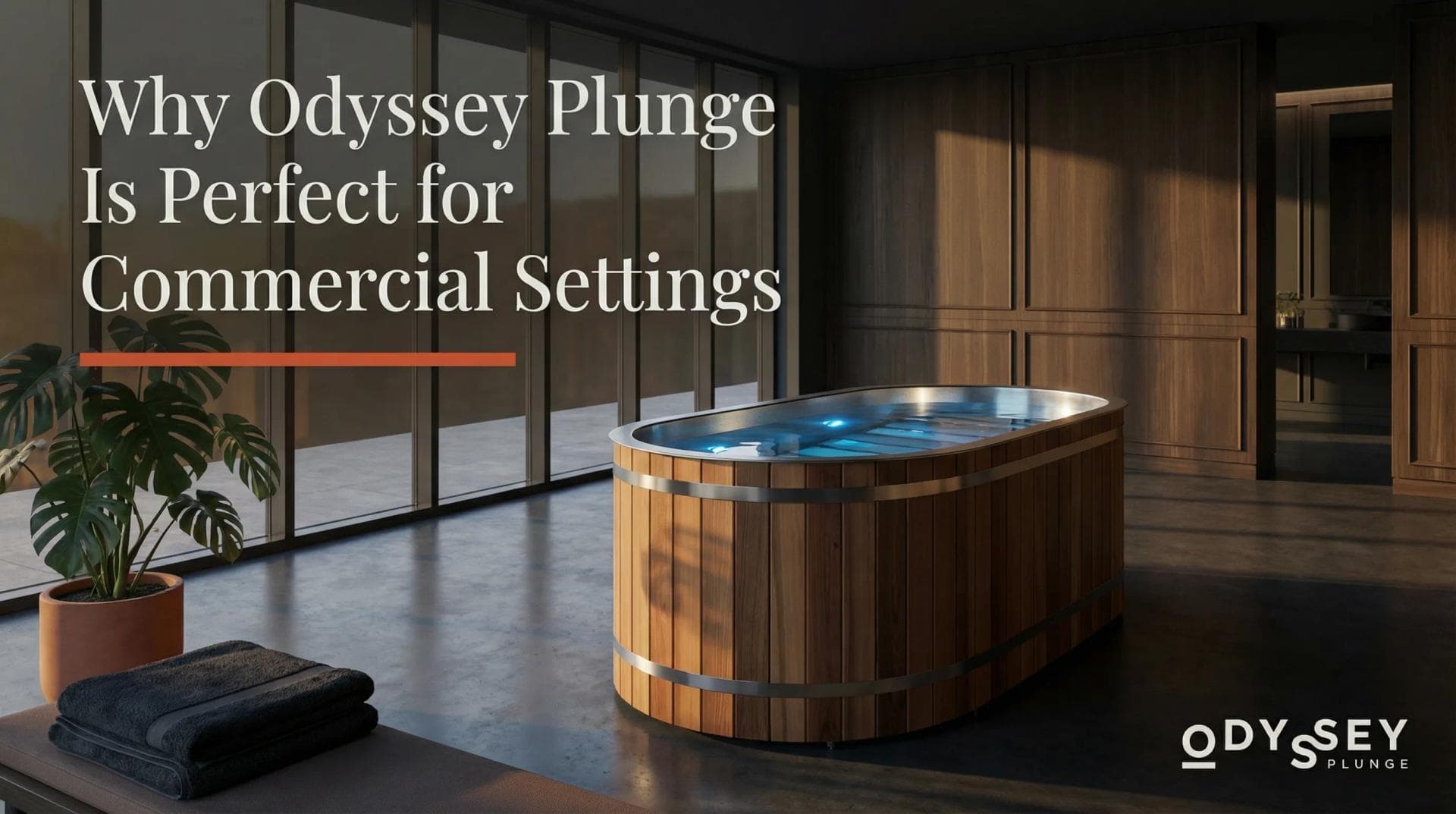
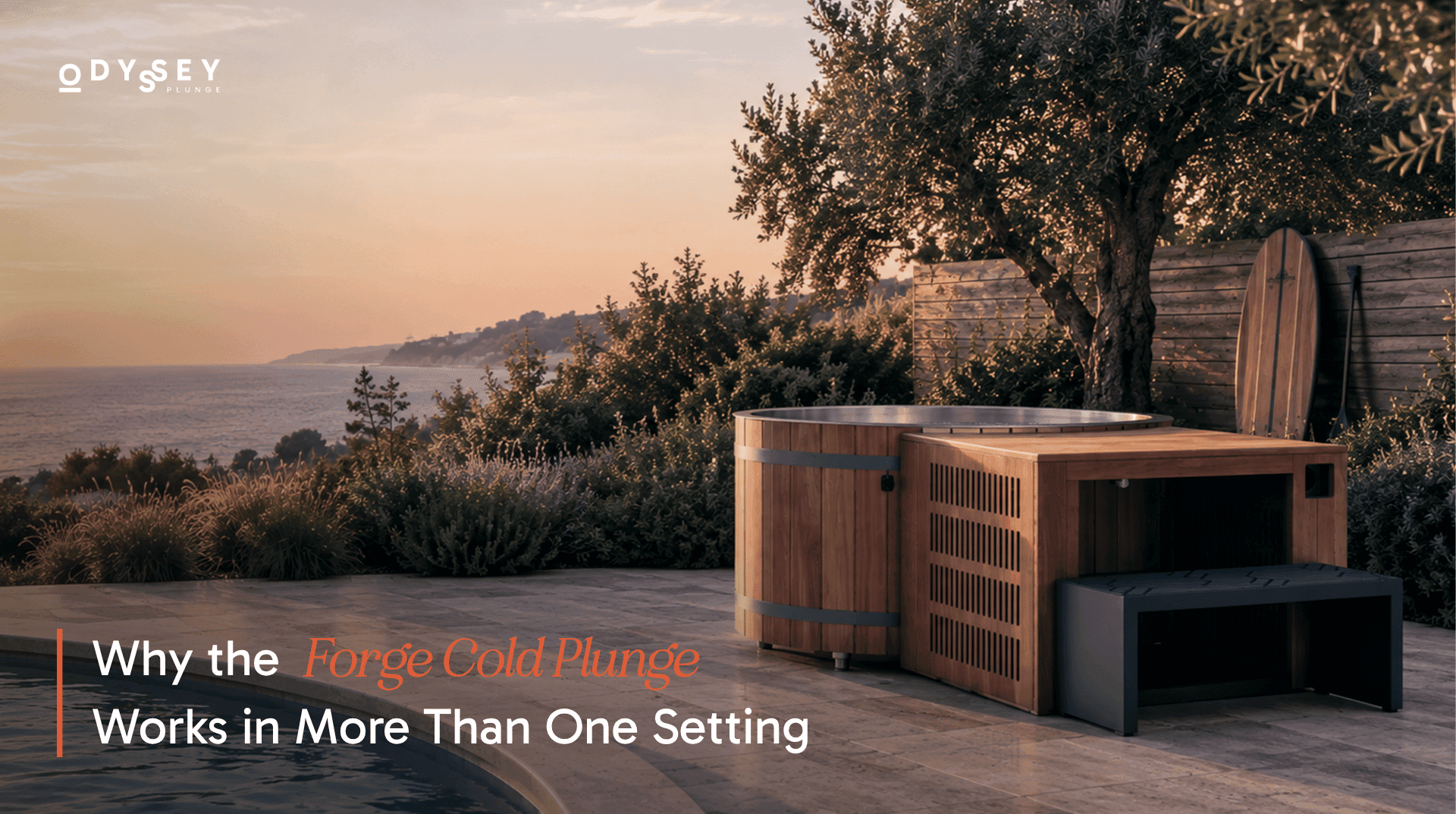
Forge pairs a generous oval bathing space with a shape that can work in a garden or a professionally planned facility. That flexibility is genuine, but it is worth understanding what actually transfers between those two settings and what does not. The tank is the same. Almost nothing else is.
Room to settle into the water
The oval tank offers a longer immersion position than an upright plunge. If you want to extend your legs rather than sit folded, the shape is doing something useful, and Odyssey positions it for one or two people depending on configuration.
Shape is only part of the experience though. Entry height, water depth and the floor around the bath all matter, and they matter more as the bath gets used by more people. A beautiful tank is less useful if people cannot approach and leave it comfortably with wet feet.
Before committing to a position, stand where the bath will go and work through the whole movement: approach, entry, the session itself, exit, and where you go next. That sequence tells you more than a specification sheet.
Temperature range opens up a second use
Forge runs from 3 °C to 42 °C. That range is the reason a single vessel can serve more than one kind of session.
At the cold end it does what any plunge does. At the warm end it becomes something closer to a warm soak, which some owners use for contrast work or simply for a different kind of session in winter. If you expect to move between the two regularly, say so when specifying, because the chiller and heating selection follows from how you intend to use the range rather than from the fact that it exists.
It is worth being realistic about transition time. Moving a large volume of water between temperature extremes is not instant, and planning a session around it is more practical than expecting it on demand.
A finish that needs sensible care
Forge combines a stainless steel tank with cedar cladding. The two materials are doing different jobs and they age differently.
Stainless steel gives a robust water-contact surface that tolerates cleaning and does not mind being wet. Cedar gives the bath its warmer visual character, and it behaves like timber: it moves, it weathers, and it responds to where you put it.
The routine is undemanding but it is not nothing:
- Wipe the waterline, where a tideline otherwise builds up
- Keep debris from collecting against the cladding
- Inspect the timber finish periodically and treat it before it fails rather than after
- Follow the finish care supplied with your bath
Outdoor timber in strong sun and driving rain needs closer attention than timber under a canopy. Neither is wrong, but a sheltered position genuinely saves work, and that is worth factoring into where you place it.
Specify the supporting system, not just the tank
This is where home and commercial separate.
Odyssey offers cold-only and hot-and-cold chiller selections, and optional WiFi control. Ask what is included with your selected version, particularly the filtration components, rather than assuming a range specification applies to your configuration.
For frequent shared use, the conversation has to go further:
- Expected daily bathers and the busiest hour, not the average
- Turnover and how quickly the system can recover between users
- Surface skimming and what keeps floating contamination out of circulation
- Dosing and test regime, including who performs it and how it is recorded
- Service access, so a filter change does not mean closing the facility
No tank is ready for commercial operation on its own. The right plant specification depends on the venue, the bather load and a site-specific risk assessment, not on the vessel. A bath that performs beautifully for one household can be entirely unsuitable for a gym that puts forty people through it on a Saturday, and the difference is everything around it.
Fit is the deciding factor
At home, Forge is a way to make a deliberate recovery space without choosing a rectangular bath. The oval shape reads as considered rather than industrial, and the cedar softens it against planting or decking.
At a venue, it can form part of a wider engineered system, where the tank is one component in a treatment loop that has been designed for the load it will carry.
Either way, the useful thing you can do early is share the detail. Give us the floor plan, the expected peak use and the installation conditions, and the tank and the treatment loop get designed together rather than one being fitted around the other after the fact.
How Forge compares within the range
If you are weighing Forge against its siblings: Titan is rectangular and open, with no internal seat. Summit is taller, with a stainless steel seat and a double step. Atlas is round and compact with a built-in seat and two steps. Aegis is marine-grade stainless throughout with a slanted back and no timber to maintain.
Forge sits between them, offering a longer bathing position than the upright formats without the rectangular footprint of Titan.
Next step: Explore Forge, and talk to the Odyssey team about your intended bather load before you specify the plant around it.