Buying Guides
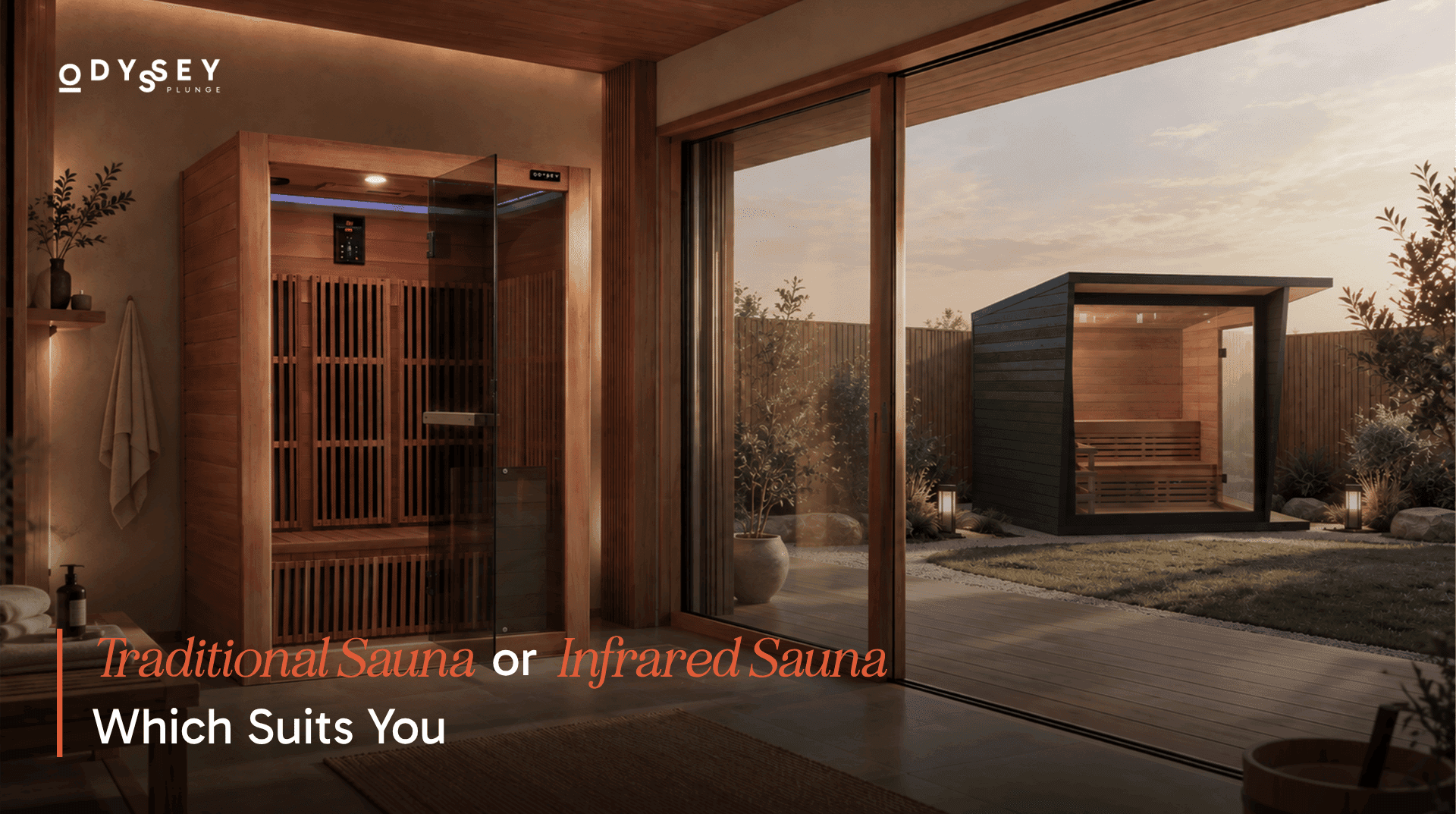
Traditional Sauna or Infrared Sauna: Which Suits You
By Odyssey Plunge · 2026-11-06 · 4 min read
Both can create a useful heat ritual, but the heat feels different and the installation requirements differ enough that the decision is rarely about preference alone. It is worth separating the experience from the practicalities, because people usually choose on the first and get caught out by the second.
Traditional heat
A traditional sauna heats the room, its benches and the people inside it. The air temperature is high, the heat is enveloping, and pouring water onto hot stones changes the character of the session in a way that is central to the ritual for a lot of people.
Odyssey's Vulcan has a full-height glass front, a cedar interior and an 8 kW electric heater option. A wood-fired option is also available, which changes the pace of the whole thing: lighting a fire and waiting is part of the appeal for some owners and a chore for others.
Before you commit to a position, check the exact electrical specification, or the flue and clearance requirements if you are going wood-fired, with qualified installers. An 8 kW heater is not a socket load, and a flue has its own rules about proximity to anything combustible.
Then think about the room around the heat:
- Bench comfort and whether there is an upper and lower level
- Ventilation, which affects both how the session feels and how quickly the room dries afterwards
- Where people cool down, because a sauna with nowhere to go next is only half a facility
Infrared heat
An infrared sauna uses emitters to warm the occupant and the surrounding surfaces more directly, generally at a lower air temperature. The sensation is different: less of the heavy, enveloping air, more of a direct radiant warmth.
That may suit someone who prefers a gentler-feeling session, or who has less space to work with. Odyssey's Zarin IR Sauna sits in this category.
Check the actual model's dimensions, power requirements and emitter layout rather than reasoning from the category. Emitter placement in particular varies a great deal between products and it determines whether the heat reaches you evenly.
One honest note. There are a lot of claims made about infrared saunas, particularly around detoxification and the treatment of specific conditions. Choose on how the session feels, what fits your space and what you will realistically use. Do not choose on broad health claims, from us or from anyone else.
Choose for the ritual you want
Strip the marketing away and the question is quite simple.
If you enjoy the atmosphere of a genuinely hot room, traditional bench seating and the option of water on the stones, Vulcan is the natural starting point. The ritual is the point, and a traditional sauna delivers it.
If you want a compact, individually controlled heat session at a lower air temperature, compare the infrared range. It asks less of your space and your supply, and it suits a shorter, more frequent habit.
In either case, the sensible precautions are the same. Drink water. Leave if you feel faint. Seek medical advice if a health condition, pregnancy or medication affects your heat tolerance, and take that seriously rather than treating it as boilerplate.
Plan the whole setting
The best sauna has a sensible route from changing area, to heat, to shower or cool-down. That sequence is what makes a sauna get used, and it is almost always decided by where you put the box rather than by which box you bought.
Practical things worth checking before anything is positioned:
- Room to open the door fully without obstruction
- Access to maintain exterior surfaces, particularly on a cabin sited against a fence
- A non-slip route between heat and cold, if you are pairing with a plunge
- Somewhere to put towels and shoes that keeps debris away from the water
If you are pairing heat with a cold plunge, let users decide how much temperature change feels appropriate to them. A dramatic contrast is not automatically a better one, and there is no obligation to go straight from one to the other.
Installation in short
| Traditional (Vulcan) | Infrared (Zarin) | |
|---|---|---|
| Heat source | Heated room, stones, optional water | Direct radiant emitters |
| Air temperature | High | Lower |
| Typical supply | 8 kW electric, or wood-fired with a flue | Confirm per model |
| Ritual | Löyly, longer sessions, social | Shorter, individual sessions |
| Space | A cabin and its clearances | Generally more compact |
Treat that as a starting point for a conversation rather than a specification. The exact figures belong to the model and the installation, and they want confirming with the people who will fit it.
Next step: Compare Vulcan with the Zarin IR Sauna, and request the installation requirements for whichever suits your space.